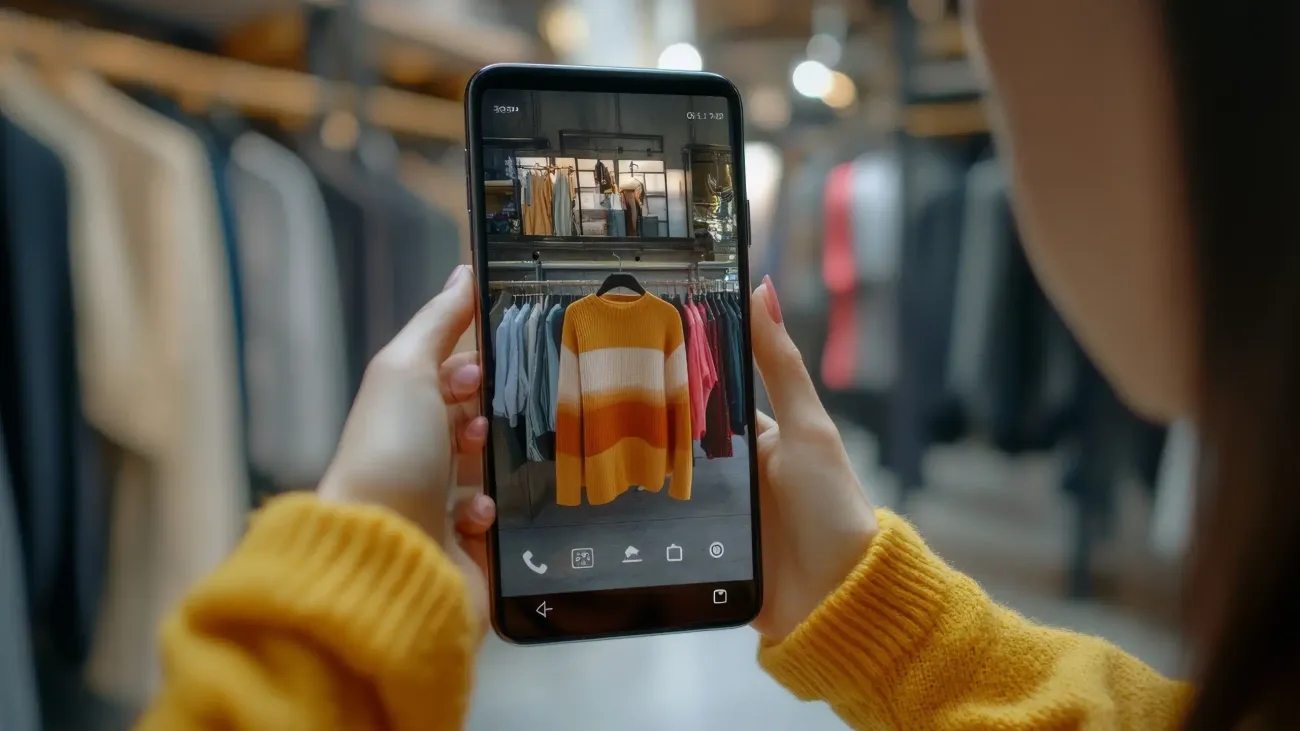
Finding products now starts before the search
For years, finding products has followed a familiar script. Someone searches for something, compares options and slowly narrows down their choice. Retailers compete to appear at the right moment, and brands spend heavily to catch people when they are ready to buy. The whole sequence assumes the shopper starts the search. Google has now broken that assumption.
With the shopping updates it announced in November 2025, Google has moved further from responding to what people ask towards predicting it, shaping the moment before the question arrives. The result is a big change in how products reach people and how people decide.
From search to suggestion
Google's AI shopping features in AI Mode and the Gemini app blur the line between browsing and being shown what you might want next. People can describe an item in their own words, upload a picture or just hint at what they are after, and Google suggests products they can buy from its Shopping Graph, which it says covers more than 50 billion product listings. Recommendations, comparison tables, price information and reviews appear without the usual work of searching, filtering and checking.
Search used to be the starting point. Now the system makes the first move.
Finding products is shifting from being led by what people ask for to being led by their situation. Google works out where people are in their journey and offers options before they have said what they want.
The personal shopping assistant becomes real
For years, technology companies have promised a digital shopping assistant: a tool that understands what you need, compares options and helps you buy with confidence. Until now, most attempts relied on fixed rules, customer groups or limited data.
Google's new system is different. It uses generative AI to shape options as it goes. It understands nuance, combines signals from searches, images, behaviour and context, and shows results that feel less like a page of search results and more like recommendations from someone who knows what you are looking for.
That matters because the moment of decision moves. People stop exploring a whole market and start choosing from a shortlist.
Less effort changes behaviour
Most people decide quickly when they shop online. They do not enjoy comparing endless versions. They want confidence, relevance and simplicity. Google's new approach cuts out the effort: no more switching between tabs, hunting for what is in stock or comparing features across sites.
The "Let Google Call" feature, where Google's AI phones local shops to check stock and prices, removes another layer of effort. And agentic checkout, being rolled out with US retailers such as Wayfair and Chewy, can complete a purchase through Google Pay when an item someone is tracking drops to the price they chose. People go from unsure to bought in very few steps.
When there is less effort, more people buy. More importantly, loyalty shifts towards whichever platform removes the most effort.
Being found is the new battleground
If finding products moves earlier, away from the moment of search and towards the moment before it, brands and retailers have to rethink how they show up. Being seen becomes less about ranking and more about fit. Google's systems favour relevance, clear information, structured data and anything else that helps its AI understand a product.
That makes these things more important:
- high-quality product data
- consistent product names
- detailed product attributes
- clear descriptions of value
- clean images
- trustworthy reviews
The winners will be the brands whose product catalogues are easiest to understand, more than the ones with the loudest advertising.
Choices shaped by AI
The change in behaviour matters more than the technology. When people start relying on AI recommendations, they put up with messy search results less and less. They start expecting the system to do the work for them.
Over time, finding products becomes less about "finding what I want" and more about "showing me what fits". We have seen the same change in entertainment, where many of us browse music less and accept recommendations more. Shopping is going the same way. Our post on the discovery-first economy explores this shift in more depth.
What this means for retailers
Retailers now need to design for journeys that start with being shown things, not with a search. That means making sure:
- product data is complete and machines can read it
- stock information is live
- availability can be checked
- prices are clear
- product variations are easy to understand
- content is structured for AI as well as people
Retailers that treat AI discovery as just another channel will fall behind. Those that build their whole approach around it will move ahead.
A product data checklist for AI shopping
Practical steps to make your catalogue eligible for, and attractive to, AI shopping assistants:
- Complete your Merchant Center feed. Fill in every relevant attribute as well as the required ones: size, material, colour, what it works with and what it is for.
- Write titles and descriptions that answer questions. Say who the product is for and what problem it solves, in the words customers use.
- Keep prices and stock live. Update stock often, including what is available in local shops, so assistants do not recommend things you cannot sell.
- Add structured data to product pages. Product, offer and review markup helps systems confirm what your feed says.
- Earn real reviews. How many reviews you have and how detailed they are both feed into how assistants judge fit and quality.
- Get ready for agentic checkout. Check whether you are eligible, and make sure returns, delivery and policies are clear enough for an agent to rely on.
The wider shift from search to AI answers is covered in the new search order.
Google's joined-up advantage
Search was once Google's most valuable asset. Now its advantage comes from being able to join up shopping behaviour across search, images, maps, ads and phones. By weaving generative AI into all of this, Google gains something new: an up-to-the-minute understanding, based on context, of what people might want next.
When a platform knows what people want before they ask, it changes the market. Brands compete for eligibility, the right to appear when AI picks what to show, as well as for attention.
A new era of finding products
These updates point to a world where products appear naturally as people go about their lives, comparisons and checks happen automatically in the background and the journey from interest to purchase becomes almost invisible.
For shoppers, that means better decisions with less effort. For retailers, it means competing in a market shaped by AI more than by search. And for Google, it means setting the pace for the next ten years of online shopping.


