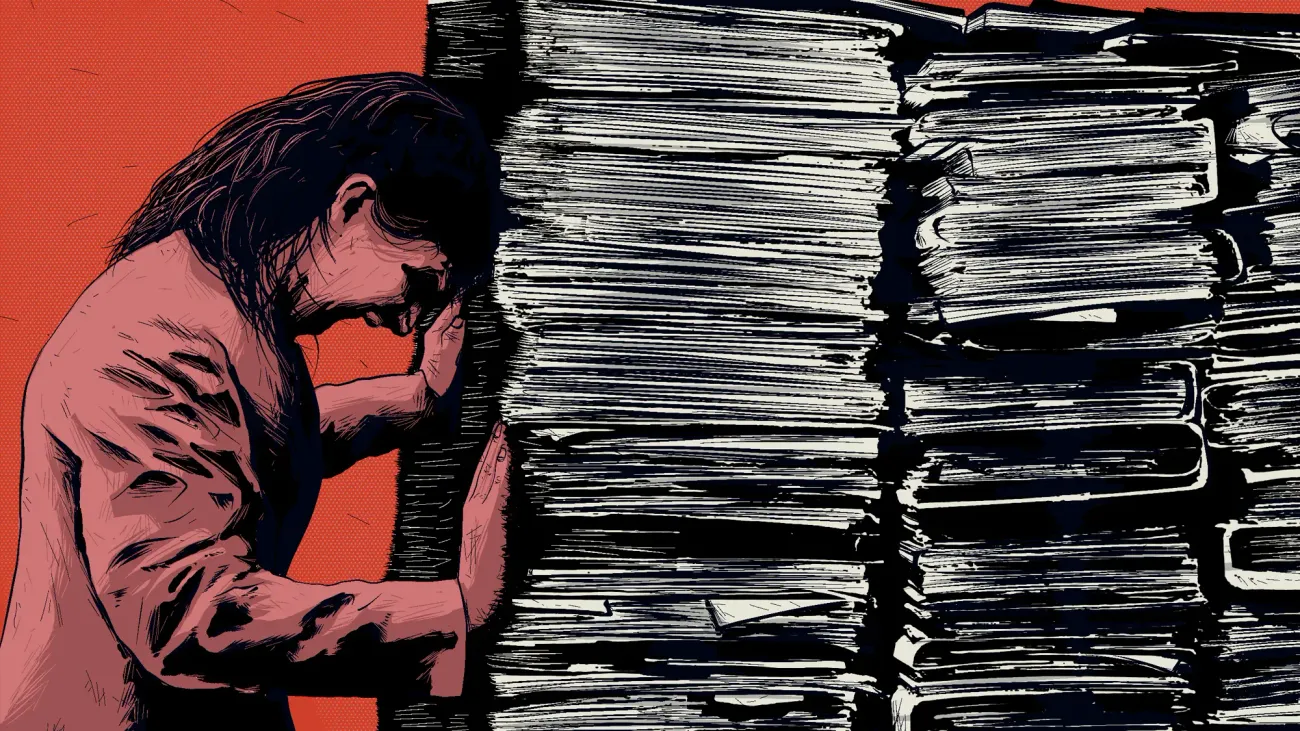
The board calendar is full of AI steering committees, risk reviews and escalations waiting for the next free meeting slot.
Meanwhile, the model has already been retrained twice. The product team has moved on. And somewhere in the business, someone has started using an unapproved tool to get the job done faster.
This is the governance paradox of the AI era: in trying to cut risk, companies often slow down change, and sometimes increase their risk in the process.
Governance built for control
Companies are right to take AI governance seriously. Regulation is tightening, and boards are being asked questions they cannot easily answer. The EU AI Act requires companies using high-risk systems to monitor how they work, keep logs and make sure people oversee them. ISO/IEC 42001 treats AI governance as a management system that has to keep improving. NIST's AI Risk Management Framework builds governance into the whole life of a system.
In response, companies have set up steering boards, ethics panels, design authorities and risk councils. Public-sector audits show the same pattern: layer upon layer of governance groups, review panels and consultation forums.
The intention makes sense. AI brings opacity, drift, bias and security risks, and oversight is needed.
The problem starts when oversight happens only now and then and centres on committees, organised around meetings when it should be built into systems.
Most boards and their committees meet a few times a year. AI models can be retrained in days, and product releases move in days. When every significant AI change needs a formal review, governance becomes a queue. And queues build up.
The cost of slow decisions
Software delivery offers a well-studied example. Google's DevOps Research and Assessment programme (DORA) has studied change approval boards for years. Its 2019 State of DevOps report found that heavy change approval processes, such as change approval boards, hurt both the speed and the stability of delivery. DORA's guidance notes that formal outside approval is not linked to fewer failed changes.
Slower delivery means bigger batches of change, and bigger batches do more damage when something goes wrong. More gates can mean more risk.
The same applies to AI governance. When approvals take longer, teams delay releases, changes pile up and escalations stack up. By the time approval arrives, the situation has moved on, and people have kept using AI in the meantime.
Microsoft and LinkedIn's 2024 Work Trend Index found that 78% of AI users bring their own AI tools to work. Salesforce's 2023 research found that more than half of staff using generative AI at work did so without formal approval from their employer. Governance friction sends people to other tools without stopping them using AI.
The warning signs outside are growing too. Stanford's 2025 AI Index recorded 233 reported AI incidents in 2024, up 56% on the year before, while business use of AI grew sharply. The ways things can go wrong are multiplying faster than oversight is maturing.
This is the committee trap: more governance activity with no gain in control.
Oversight versus ownership
There is another problem. Committees add more people who can say no, and it becomes unclear who decides what.
When nobody can say who approves a low-risk change, everything gets escalated. AI governance often brings exactly this confusion, with several leaders jointly "owning" AI and no clear line between what a team can decide and what a committee must.
Some firms are redesigning governance so it keeps work moving. In March 2024, Morgan Stanley appointed a firmwide head of AI to coordinate AI strategy and governance across the business, alongside a firmwide steering group. The role exists to set direction once, centrally, so each business unit is not negotiating its own approvals.
The wider pattern is consistent: committees set the guardrails and principles, and platforms enforce them all the time. Governance becomes part of how systems are built, more than a series of procedures. Our post on runtime governance vs static governance explains how that works.
What good governance looks like
Change succeeds when oversight moves from gates to guardrails.
Sort by risk. Oversight should match the risk of each use. Not every use needs to go to the board, and requiring sign-off for everything delays everything.
Automate the checks. DORA recommends moving approval into the delivery process itself, through peer review, automatic testing and monitoring, and out of outside queues. For AI, that means automatic testing, logging, rules written as code, audit trails and live monitoring.
Check all the time. The EU AI Act stresses ongoing monitoring and logging, and ISO/IEC 42001 requires constant improvement. Both describe how a system behaves, which a meeting agenda cannot capture.
Make decision rights clear. Who approves low-risk changes? Who can pause a launch? Who owns how the system performs in live use? Without clear answers, committees grow by default.
A three-tier model in practice
- Tier 1, low risk: internal productivity tools with no effect on customers and no sensitive data. The team approves them, backed by automatic checks on data access, logging and testing. No committee involved.
- Tier 2, medium risk: systems that deal with customers or personal data but do not make significant decisions alone. A named risk owner signs them off against a standard checklist within a set number of days.
- Tier 3, high risk: systems that make or heavily shape decisions about people, money or safety, including anything in a high-risk category under the EU AI Act. A full review by the governance committee, with ongoing monitoring reported back to it.
Most uses fall into the first two tiers. The committee's time then goes where its judgement matters, and everything else moves at the speed of delivery.
The money at stake is growing. Boston Consulting Group's 2025 research found that only 5% of companies are getting substantial value from AI, while around 60% report little gain in revenue or costs, and that AI agents already account for a big share of the value being created. As AI does more on its own, slow governance gets more expensive.
Visible governance can still be ineffective
If you are an IT or security leader, the risk is governance that feels busy while value stalls.
Your teams wait for approval while unofficial tools spread. Your board asks for reassurance while live monitoring is still weak. Your risk committees grow even as AI use moves out of their sight.
The urge to add more oversight is understandable. Deloitte's 2025 board survey found that 66% of respondents said their boards had limited or no knowledge or experience of AI. Committees make accountability visible, but visible governance can still be slow, and speed now matters.
AI systems change every week. Customer expectations shift every day. If governance cannot work at a similar pace, change breaks into pieces. Strong teams adapt through approved routes. Others go around them.
The result is uneven exposure to risk, exactly what governance was meant to prevent.
Redesign governance before adding more
The job is to redesign governance and decide how much is enough.
The answer lies in design: tiers based on risk, controls built into systems, clear decision rights and constant monitoring. Committees set standards and step in on big decisions, and stop reviewing every prompt and setting.
Oversight is still essential. The rise in AI incidents shows that too little governance is a real risk. Governance for show is just as dangerous.
In a company built around AI, governance has to move from approval now and then to everyday discipline, and from the pace of meetings to the pace of systems. The board side of that mismatch is explored in The Leadership Lag.
When AI moves weekly and governance moves quarterly, value leaks away between the meetings.


