Opening Scene
Set the Shift in Motion
In a product team at a fast-growing software company, a new employee joins on Monday. There is no job description waiting in their onboarding pack.
Instead, there is a dashboard.
It shows the capabilities the organisation needs this quarter: market analysis, feature experimentation, customer insight, product documentation and competitive intelligence. AI agents already perform much of the underlying work. The team's role is to steer the system, interpret results and intervene where judgement matters.
By Wednesday, the new hire is working across three initiatives, guiding a research agent conducting customer interviews, reviewing automated market summaries and shaping product messaging for a new launch.
No single line in a job description could have predicted the work. And that is precisely the point.
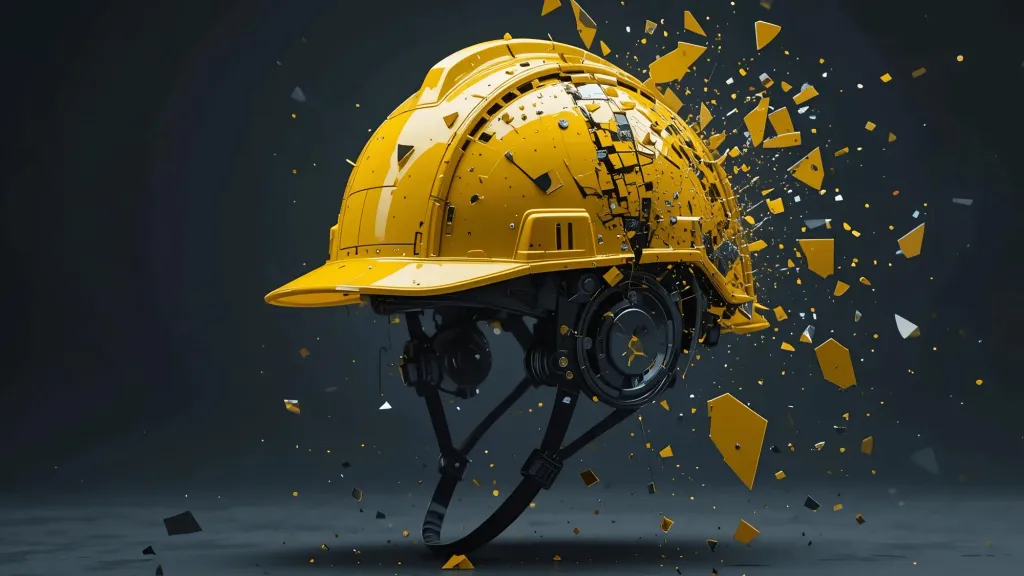
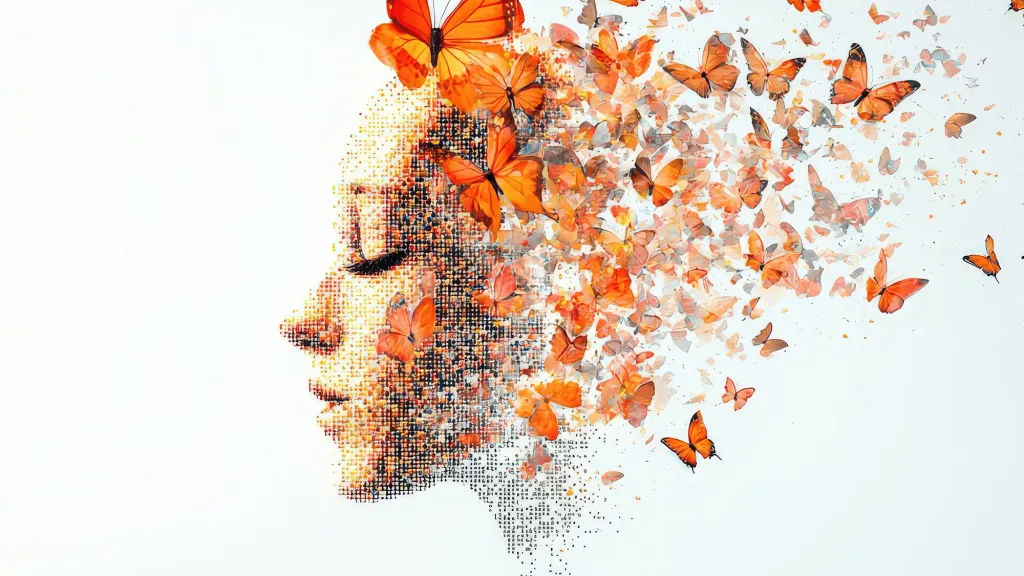
Artificial intelligence is not simply automating tasks. It is dissolving the organisational structures that once defined them.
The End of the Job Description
The Insight
What's Really Happening
For more than a century, the job description has served as the architectural blueprint of the modern organisation.
Emerging from early industrial management in the twentieth century, job descriptions were designed to impose order on expanding workforces. They defined tasks, responsibilities, reporting lines and required skills, creating the foundation for hiring, performance reviews, compensation structures and career progression. In a world where work changed slowly, this model proved highly effective.
Artificial intelligence, however, has begun to challenge the assumptions behind it.
AI rarely eliminates entire jobs in a single moment. Instead, it absorbs pieces of work across many roles: analysing data, generating reports, answering questions, reviewing contracts, writing code and organising knowledge. As these capabilities spread, the boundaries between roles begin to blur.
Research into AI adoption across organisations shows that intelligent systems increasingly perform repetitive and analytical tasks that were once embedded within specific jobs. Human workers are therefore shifting towards strategic thinking, creativity and oversight.
The result is subtle but profound. Tasks move. Responsibilities shift. Workflows evolve as new capabilities emerge. Static role definitions struggle to keep pace.
One study of workforce evolution observes that in environments where AI continuously automates tasks, traditional job descriptions can become obsolete almost as soon as they are written.
The document that once defined a role becomes a historical artefact.
Work Without Fixed Boundaries
The deeper shift lies in how work itself is organised.
In AI-enabled systems, processes increasingly operate through networks of human and machine capabilities. An AI system may gather data, generate insights and draft recommendations, after which a human evaluates the result, adjusts the direction and approves the final decision. Tasks therefore flow between systems and people depending on context and complexity.
Researchers studying so-called agentic workflows, systems in which AI agents coordinate sequences of tasks, have observed that these workflows frequently pause for human judgement at key decision points. In such environments, the human role is not to execute every step, but to steer the process.
Work therefore becomes more fluid. The central question is no longer who performs a fixed list of duties, but who ensures that the intended outcome is achieved.
Responsibility replaces task ownership, and organisational design must adapt accordingly.
The Strategic Shift
From Roles to Outcomes
For business leaders, the implications are structural.
Most organisations are still designed around roles: marketing manager, financial analyst, customer support specialist. Each role carries a defined scope of work. However, when tasks begin to move dynamically between humans and AI systems, that structure becomes increasingly brittle.
Leading companies are therefore beginning to rethink the basic unit of organisational design. Instead of organising around roles, they organise around outcomes.
Teams take ownership of end-to-end goals, improving customer onboarding, accelerating product development or increasing supply chain efficiency. AI systems perform much of the underlying execution, while humans oversee the system and intervene when complexity or ambiguity arises.
Research from management consultancies studying early AI deployments suggests that small human teams can now supervise large networks of AI agents executing complex workflows. In this environment, the human role shifts from execution to orchestration.
This transformation creates a new kind of operating model. Responsibilities remain explicit, but tasks become dynamic.
The organisation begins to function less like a hierarchy of positions and more like a network of capabilities, where workflows to whoever, human or machine, is best equipped to perform it.
The New Architecture of Work
Several patterns are already emerging in organisations experimenting with AI-native operating models.
Some companies are building internal AI platforms that provide shared capabilities across teams, knowledge retrieval, analytics, automation and decision support. Others are experimenting with internal talent marketplaces, allowing employees to move between projects based on their skills rather than their job titles. In certain organisations, teams are increasingly structured around outcomes rather than functions, with AI systems embedded directly into everyday workflows.
Despite their differences, these models share a common principle: work is defined by problems to be solved, not by positions to be filled.
As a result, the organisational chart becomes less rigid, and capabilities become the true currency of work.
The Human Dimension
Work in an AI-Native Organisation
For individuals, this transformation reshapes how careers are experienced. Traditionally, a career followed a predictable structure: enter a role, master its responsibilities and progress through increasingly senior versions of that role.
However, when AI systems continuously reshape the nature of work, roles begin to resemble temporary configurations rather than permanent professional identities.
Your professional value increasingly lies not in performing specific tasks but in applying judgement, insight and oversight within complex systems. In a single week, you might supervise automated processes, interpret insights generated by AI tools and guide teams through ambiguous strategic decisions.
In practice, you are no longer defined primarily by a job description. Instead, you are defined by the outcomes you help deliver.
This transition can feel unsettling at first. Yet it also opens new possibilities. Workers become less confined to narrow functional silos, and skills can move more fluidly across projects, products and teams.
The traditional career ladder begins to resemble a lattice, a network of experiences rather than a single upward path.
The stability of the old system may fade, but so too do many of its constraints.
Accountability in a Fluid System
The disappearance of job descriptions does not mean that accountability disappears. If anything, accountability becomes more important.
When tasks move dynamically between humans and AI agents, organisations must be explicit about who owns outcomes, who supervises systems and who intervenes when problems arise. Successful AI-native organisations therefore invest heavily in governance structures.
Responsibilities are defined around outcomes and decision rights rather than task lists. Escalation paths are clearly established; oversight mechanisms are embedded within workflows and humans remain accountable for the decisions that ultimately matter.
The system becomes fluid, but responsibility remains visible.
The Takeaway
Designing Organisations Without Job Descriptions
The job description is one of the oldest artefacts of the modern organisation. For more than a century, it has helped companies manage complexity by defining who did what.
Artificial intelligence, however, changes the nature of work itself.
Tasks increasingly move between humans and machines. Processes adapt continuously, and teams reorganise around outcomes rather than functions. In this environment, static role definitions struggle to keep pace with how work happens.
The organisations that thrive will not be those that attempt to preserve the old structure. Instead, they will redesign work entirely. Rigid job architectures will give way to flexible responsibility frameworks, with talent organised around capabilities rather than titles.
In these environments, operating models evolve to support dynamic collaboration between humans and intelligent systems, working together to deliver outcomes.
The traditional job description may not survive this shift. But the organisation itself may become far more adaptable because of it.