The new enterprise security perimeter is behavioural
Enterprise security must move beyond static identity and access decisions towards continuous behavioural assurance that tests whether users, machines and AI agents continue to deserve trust.
Enterprise security must move beyond static identity and access decisions towards continuous behavioural assurance that tests whether users, machines and AI agents continue to deserve trust.
AI agents require formal lifecycle governance that gives every production agent clear ownership, bounded authority, measurable performance and a controlled path from approval through monitoring to retirement.
Enterprise AI needs a dedicated trust layer that combines validation, provenance, observability and policy enforcement, giving organisations the operational confidence to scale models, agents and automated workflows safely.
As AI moves into material decisions and workflows, boards need reliable evidence showing how outcomes were produced, which controls operated and who held authority across the process.
AI systems operate continuously, requiring governance to move beyond periodic reviews and into execution, where policy, identity, monitoring and intervention can control consequential actions while preserving accountability and assurance.
Technology leadership begins when technical expertise stops being measured through personal delivery and starts being used to build capability, shape investment decisions and help the executive board understand where technology should take the business.

WebMCP gives websites a structured way to expose actions directly to AI agents, creating the potential for a machine-readable interaction layer alongside the human web experience.

Model Context Protocol could shift AI from another application in the GTM stack to a governed interface capable of discovering, coordinating and acting across business systems.
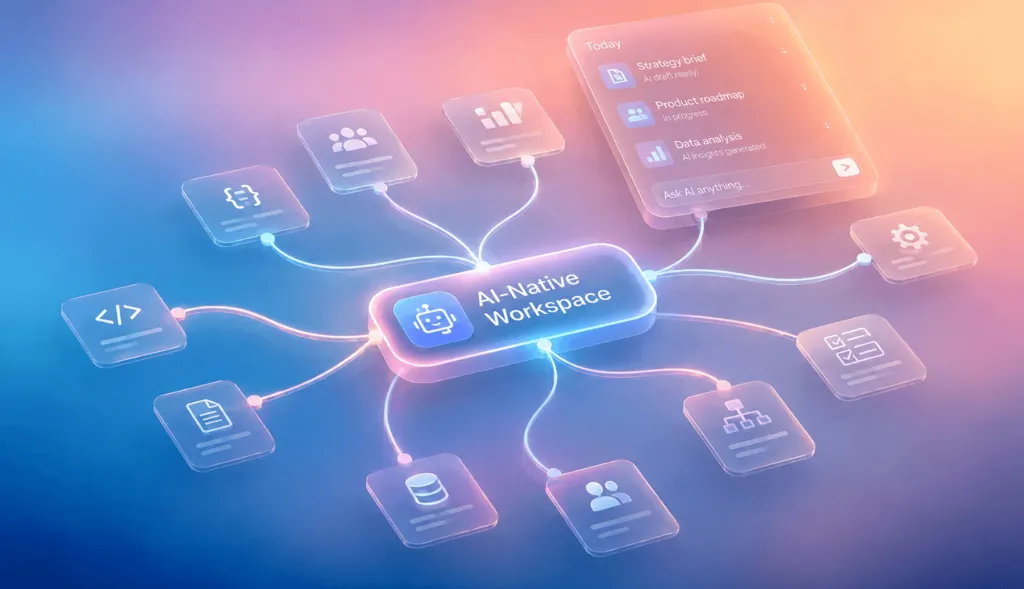
Team Brain's public proposition suggests an AI-native workspace could reduce software fragmentation by assembling data, agents, integrations and compute around business outcomes rather than individual applications.

SpaceX is assembling control across energy, chips, compute, models and applications, creating an AI strategy in which infrastructure may matter as much as the models it produces.

Amazon Bedrock AgentCore payments moves payment execution inside the agent workflow, turning spending into a governed machine action alongside reasoning, tool use and execution.

As AI agents begin acting across enterprise systems, identity becomes the mechanism that connects delegated authority, permission controls, auditability and accountable autonomy at runtime for organisations.

Stripe's reported OpenRouter acquisition suggests a broader ambition to connect AI revenue, usage metering, model routing and settlement into a programmable economic infrastructure layer.

DeepSeek Harness points to a wider shift in AI architecture, where the model becomes one replaceable component inside a composable runtime of tools, memory, execution and control.

Cloudflare Radar Researcher offers an early view of software designed for AI agents, where machine-readable tools, APIs and semantics sit alongside conventional interfaces.

Human approval can become slow, superficial and unreliable as autonomous systems scale, making bounded autonomy, consequence thresholds and targeted intervention a stronger enterprise control model.

Trust is becoming an operational capability as enterprises connect identity, authority, runtime controls, evidence and human accountability across increasingly automated digital systems.

AI policies define intent, but effective governance requires technical controls, workflow enforcement and evidence that can constrain system behaviour, expose exceptions and enable accountable intervention.

As AI agents gain authority across enterprise systems, organisations need AgentOps to connect ownership, identity, permissions, observability and intervention without allowing operational control to slow useful innovation.

As AI agents take on more revenue work, organisations will need a governed control environment connecting customer data, organisational knowledge, execution tools, permissions and measurable feedback.

Microsoft's adoption of Harvey signals that legal AI is moving into enterprise workflows, changing how legal work, professional judgement, governance and accountability must be organised.

AI agents are compressing discovery, comparison and purchasing, requiring brands to combine human appeal with structured product truth, operational access and governed customer relationships at scale.

TikTok Shop and Shopify solve different ecommerce problems. This article explains how UK businesses should compare discovery, control, margin, data, operations and platform risk before deciding which role each should play.

Enterprise software is shifting from visible applications to orchestration layers that coordinate workflows, data, people and AI agents, moving operational control and strategic advantage behind the interface.

AI may arrive through familiar applications, but enterprise value depends on redesigning workflows, governance, skills and management disciplines around the technology.

AI strategy is shifting from identifying promising use cases to managing the workflows, ownership, controls and performance disciplines required to turn experimentation into repeatable enterprise value.

As AI moves into enterprise workflows, organisations need visibility across identity, information retrieval, tool use, policy decisions and outcomes to preserve trust, control and accountability.

As AI systems move from generating outputs to taking actions, governance must become an executable operational layer that can enforce policy, manage authority and generate evidence while work is happening.

As leading AI models become easier to access, lasting enterprise advantage will depend on workflow control, proprietary context, orchestration, governance and the discipline to turn intelligence into measurable operating performance.

AI pilots can prove technical capability quickly, but enterprise scale depends on operational trust: clear boundaries, observable behaviour, accountable ownership and evidence that systems remain controlled in production.

Enterprise AI strategies often break down because unclear workflows, fragmented information and weak governance prevent capable technology from producing reliable, controlled and measurable business value.

As AI systems gain authority to make decisions and initiate work, CIOs must govern the identities, permissions, orchestration and evidence that keep enterprise autonomy accountable.

As AI moves from generating answers to executing work, durable enterprise advantage is shifting towards the infrastructure that governs context, identity, workflows, risk and performance.

AI is dissolving the boundaries of traditional roles. In the agentic organisation, work flows dynamically between humans and machines — replacing static job descriptions with fluid responsibility frameworks built around outcomes.

As AI systems increasingly become the first point of contact between customers and brands, conversational design, trust, and escalation strategy are becoming core business capabilities rather than technical features.

AI rarely replaces entire occupations. Instead, it absorbs tasks until traditional roles hollow out from within — leaving workers employed but fundamentally redefining what their jobs mean.

AI is dissolving traditional job structures by fragmenting tasks and redistributing work between humans and machines. The organisations that succeed will redesign roles around responsibility, system oversight, and outcomes rather than static job descriptions.

As AI shifts from experimentation to operational infrastructure, organisations must replace vanity metrics with outcome-driven measurement frameworks linking AI to financial performance, operational efficiency, workforce productivity, and risk governance.

Enterprise AI programmes are increasingly collapsing under fragmented tool stacks. The organisations that succeed will move from collecting tools to designing unified AI platforms that enable scale, governance and velocity.

AI is not creating a level playing field. Organisations with the right data, governance, and learning structures are quietly building compounding advantage, while others remain trapped in endless experimentation.

AI's ultimate success is not dramatic disruption but quiet ubiquity. As artificial intelligence fades into the background of enterprise systems, the organisations that thrive will be those that treat it as infrastructure rather than innovation.

AI's biggest impact is not automation. It is the delayed shift in power, trust, careers and culture that unfolds 12-36 months later. Leaders who measure only efficiency will miss the structural changes that determine long-term success.

Enterprise AI has entered its realism phase. With 95% of pilots failing to deliver ROI and only 14% of CFOs seeing clear impact, disciplined cost control, governance, and measurable outcomes now separate durable advantage from expensive experimentation.

Hiring elite AI talent won't fix stalled transformation. The real constraint is organisational design, decision rights, data access, and incentives determine whether intelligence becomes capability or frustration.

By 2026, AI exposes the limits of project-based strategy. Organisations that shift to owning and governing living systems will compound value, while those still “delivering” AI will watch it decay.

Autonomous agents fail not because they lack intelligence, but because they operate on fragmented enterprise truth. Unified, real-time, policy-governed context is now the prerequisite for safe and scalable autonomy.

AI exposes the limits of batch-era data pipelines. Sustained decision quality in volatile environments requires closed-loop, platform-based data architectures, not greener dashboards.

AI systems now shape enterprise decisions, not just infrastructure. Boards that fail to treat AI risk as enterprise risk, with structured, visible oversight, will face regulatory, reputational and strategic consequences they cannot delegate away.

AI systems are moving into regulated, high-impact roles faster than most organisations can explain or defend them. The next competitive advantage belongs to those who design auditability into AI from the start, because confidence is no longer enough.

In AI-driven markets, competitive advantage belongs to organisations that iterate fastest, not those that launch the most accurate models. By 2026, learning speed becomes the new moat.

Prompt rules shape outputs. Governance defines responsibility. As AI systems become autonomous, enterprises must move from configuration-based guardrails to architectural accountability, or risk scaling liability instead of value.